How should well-known repertoire warhorses sound?
I’m thinking specifically of Brahms’s First Symphony and Tchaikovsky’s Violin Concerto, those two great works from 1876 and 1878 respectively. Or, put another way, when you think of works such as these, do you have an ideal, favourite, even idealised, performance in mind? A specific performance, or an imaginary one? How do you hear such works in your head? And what are you listening for? In other words, what are your performance markers, the must-have tick-boxes, to make realisations of these works meaningful to you?
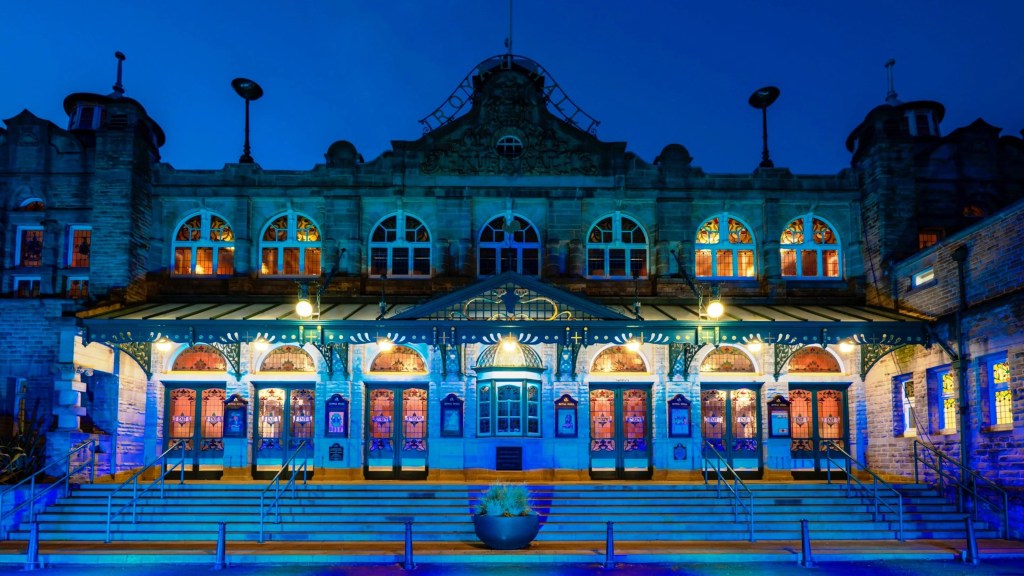
I ask this because I heard immensely fine, though not necessarily typical, performances of these works in the refined environs of Harrogate’s sumptuous Royal Hall, with the BBC Philharmonic conducted by Ben Glassberg. Hana Chang was the soloist, in a concert which was part of the 2026 Harrogate International Festivals.
Once in a while, one approaches even a great work with just a tinge of jaundice. In this case, I anticipated the Tchaikovsky thinking ‘yet another performance of the Tchaik Violin’. That it’s an evergreen work is a given, but occasionally, I think ‘enough already’. I ended up with egg on my face, because Hana Chang presented a totally exquisite rendition.
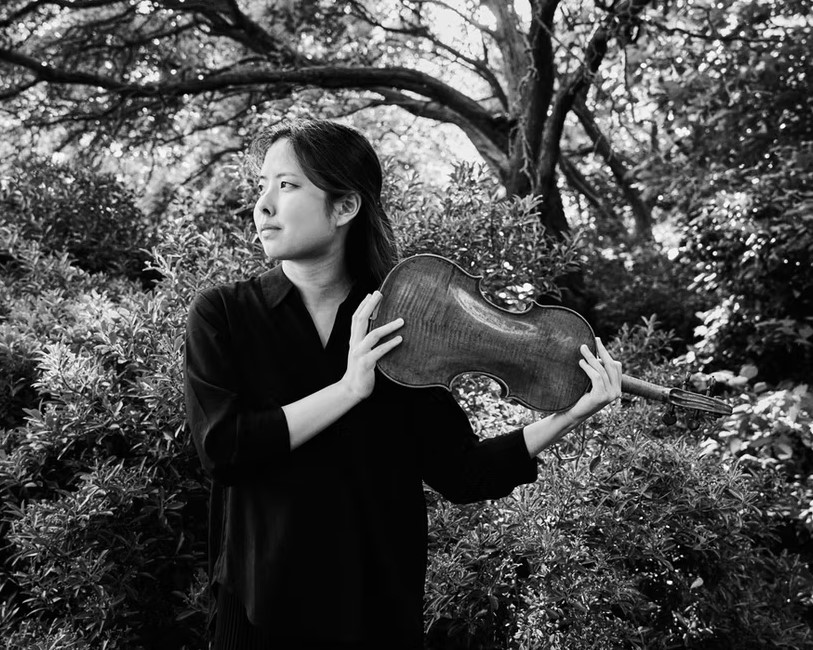
There have been many showy, if not ostentatious, live and recorded performances, and the work is robust enough to withstanding even the most extreme of these. Chang, currently a BBC Radio 3 New Generation Artist, was virtuosic when needed, but this was essentially a wistful, reflective, lyrical interpretation. For example, her opening of the middle movement (muted, con sordino) became a sotto voce intimate, chamber-like interlude, supported by a cushion of strings and beguiling woodwinds. Throughout the concerto, Glassberg, no stranger to the opera pit, and therefore well versed in how to manage an orchestra in its accompanist role, controlled the orchestral balance with wonderful receptiveness.
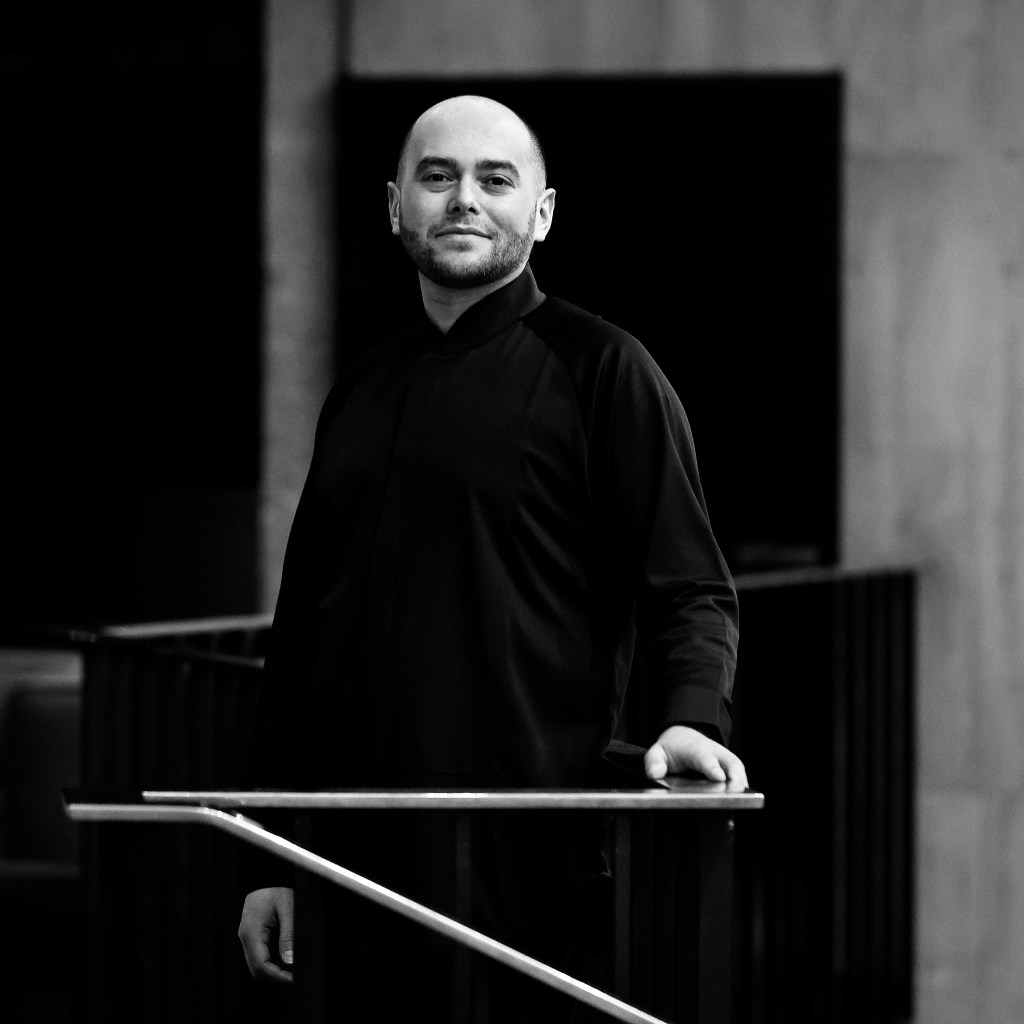
Glassberg’s view of Brahms’s First Symphony was as far from the lumbering, though nonetheless grand, twentieth century performances as one can get (Boult excepted). In fact, rather like Adrian Boult’s 1972 recording, he realises that the first movement’s introduction isn’t necessarily a slow one, but ‘a little sustained’, and he therefore forged through it so that the Allegro which followed wasn’t a sudden tempo change, but a smooth change of gear. It was a frenetic Allegro with taut muscles and nervous energy, complete with Exposition repeat.
The slower second movement shouldn’t be all that slow, despite what numerous recordings might suggest. Glassberg observed a true Andante and kept things moving. But there’s a balance to be struck here, and there are moments when the tempo should have been pulled back to allow Brahms’s lyrical lines to breathe. There was rarely a moment of repose.
Throughout the performance, Glassberg took a carefully calibrated approach to orchestral balance. This was clear to see, and not just to hear, in the way he conveyed his instructions to the orchestra. He’s precise to the letter, yet always expressive, which is why the players responded so well to him.
As a concert opener, we had Louise Farrenc’s rarely heard Overture No. 1 in E minor composed in 1834, a straightforward and solidly written piece though, on balance, unmemorable.
As for the orchestra, the BBC Phil is never less than excellent. But on this occasion, they were let down by being crammed onto a relatively small platform, sitting cheek-by-jowl. Gorgeous though the Royal Hall is, the extended stage is narrow. The brass (one of the best sections in the land) were stuck against the back wall, their sound unable to fully penetrate into the relatively dry acoustic of the hall. Then, there was only room for three double basses, and it was clear that the full complement of BBC strings wasn’t being used. It will be interesting to hear the Radio 3 broadcast (date yet to be released) of this concert, and whether the Beeb’s engineers will tweak the sound to enhance the bass and brass.
In the event, however, it’s clear to me that Ben Glassberg is a fine conductor, and as for Hana Chang: more, please!


What do you think? Comment and/or leave a reply.