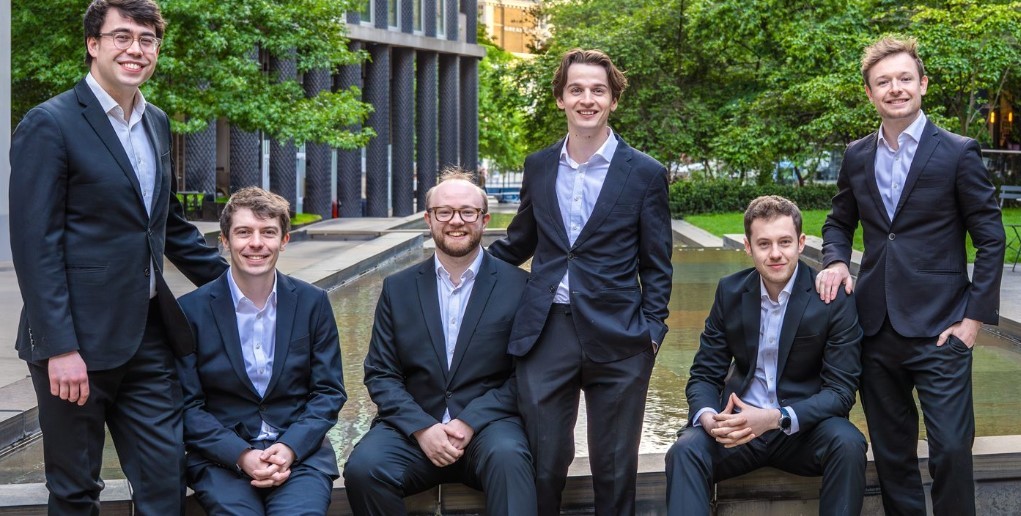
Though The Gesualdo Six were running at just 83 per cent on this occasion, you’d never have guessed, because some late changes to the programme ‘Wishing Tree: A Choral Journey’, and some jiggery-pokery with the notes here and there, meant that the show could successfully proceed without the indisposed sixth man.
Thus, a Thomas Morley madrigal replaced one by William Byrd, and Stanford’s The Blue Bird seemed to have flown the nest, and so on, but the remaining five singers easily beguiled the capacity audience at York’s spacious St. Lawrence’s Church. This highly renowned ensemble are artists in residence at this year’s Ryedale Festival, presenting four concerts in total.
A slight digression, if I may.
St. Lawrence’s Church was built in the 1880s. The Victorians were fabulous, but could be a funny bunch, couldn’t they? In this case, they demolished the medieval church because it was too small, though its tower is still there in the grounds. Perhaps they reckoned that there were enough old churches in York, so they could afford to demolish one. Still, York boasts the highest concentration of surviving medieval places of worship in England (Norwich comes top, in case you were asking). And yet the Victorians were also great restorers, as All Saints’ Hovingham (see my previous post) testifies, and such projects offered the choice between restoration or demolition (a bit of a no-brainer, I guess), because the ancient fabrics were often in such bad repair.
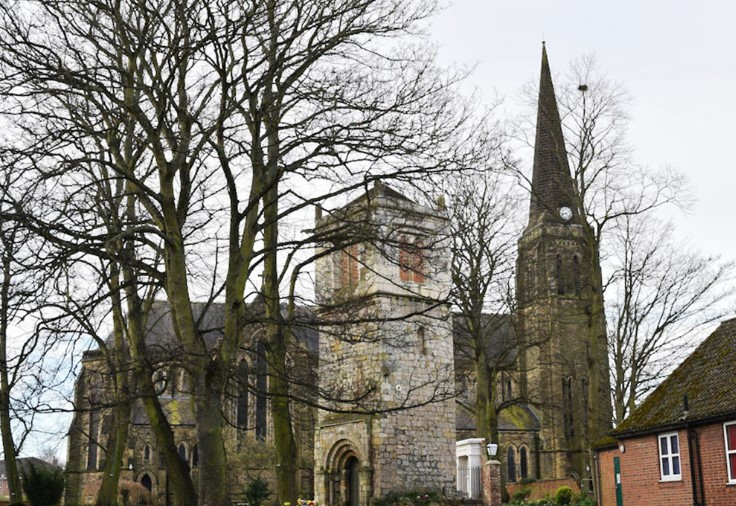
The Victorians might have demolished the old St. Lawrence, but they replaced it with what’s still the second largest church in the city. I mention this, because not only is this High Anglican church large, with a fine acoustic, but it has an impressive, and flourishing, musical tradition, so hosting The Gesualdo Six was a good fit for both parties. And it’s not even in the city centre. I thought it was, so I set off walking from the railway station, not realising that I’d still be walking 25 minutes later.
Even so, York’s city centre was touristy and noisy, and St. Lawrence’s, away from the crowds, therefore afforded sanctuary in more senses than one. En route, I heard the Minster carillon intone the hymn tune York, which I always associate with Vaughan Williams’s The Pilgrim’s Progress, and a short time later, The Gesualdos were singing his arrangement of Bushes and Briars. Let’s not forget how wonderful this setting is. VW takes a folk song, turns it into art-music, and yet somehow retains a folksiness. Don’t you think that such craft defies analysis? It’s just there, and it works.
The concert’s repertoire ranged from 15th century Josquin des Prez, to the present day, and who’d have thought that Josquin was game for a laugh? We were never told this as music students. But his witty, if not suggestive, El Grillo, came across as playful, though there’s a certain charming cheekiness to The Gesualdo guys in any case.
Of the contemporary music, Anna Semple’s My Bonnie Lies, composed in 2019, stood out. It isn’t an arrangement, but rather a paraphrase on this ancient folksong. With its overlapping fragments of melody and aleatoricism, it was fascinating. Another evocative work from 2019, and specifically composed for The Gesualdo Six, was The Wind’s Warning by Alison Willis, strangely chilling with its sounds of the wind, dissonant and delicate in equal measure.
The Gesualdos’ director, Owain Park, steered the audience through this engaging programme. His easy and friendly approach is a hallmark of this exceptional ensemble, and it seemed only right that after the concert, the singers mingled and chatted with their captivated audience; no one seemed in any hurry to leave.


What do you think? Comment and/or leave a reply.