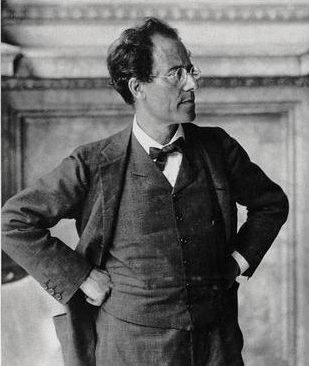
This year marks 120 years since the premiere of Gustav Mahler’s (1860-1911) Sixth Symphony (1904, rev.1906).
Mahler now ranks amongst the most popular of classical composers. This is heartening to his memory, and a kick in the teeth for the Third Reich and those antisemitic Viennese who supported that regime. They airbrushed Mahler from history for a while, and it took a generation for his music to be rehabilitated, not least in Vienna itself. Ironically, perhaps, it was a Jewish conductor, Leonard Bernstein, who did more than anyone else to make Mahler a mainstream composer.
The Sixth Symphony, occasionally referred to as the Tragic, was something of an obsession for me when I was a student. I adored its grand sweep, its juxtaposition of tragedy and elation, lyricism and assertiveness, and the overall sound of Mahler’s orchestra. Later, I reacted against overblown Romantic rhetoric in general, Mahler in particular (though I never relinquished my weakness for Richard Strauss).
The problem is with me, not Mahler, and despite my ambivalence towards the music, I recognise him as a towering symphonist and a genius at text-setting. Mahler’s Mittel-European angst was one of the things that once riled me, but I now realise that all that he is doing is laying bare his own fixations and neuroses. He is, in fact, one of the most unrepressed of composers in the way in which he exposes his own anxieties.
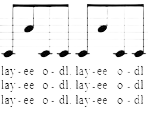
I recently attended a performance of the Sixth, the first complete rendition in years for me. At my most anti-Mahlerian, I always maintained that one can never get bored listening to even his most extended works, yet hearing it now, the first movement doesn’t entirely convince. It’s so rigidly tied to the bar-line that there’s no fluidity to the rhythm or metre, and its rumpty-tumness becomes tiresome, with the codetta to the second subject reminding me too much of the 19th century popular song A Fine Old English Gentleman.
But what’s good really is exceptional, such as the astonishing orchestration, and the sound of the cowbells that take us on a journey to a rarefied place where we can leave behind our mundane, earth-bound anxieties. All of this, and more besides, demonstrates that we’re in the hands of a wizard.
Some performances, live or in the studio, place the Andante as the second movement, which deviates from the norm, though a plan favoured by the composer even if the printed score’s first edition places it third. This works, because I feel that we need some repose after the gigantic first movement, and the Scherzo is really too sinister for us to sufficiently cope with so soon after such a monumental opening.
It’s those places in this work where Mahler allows himself the freedom of what could be described as orchestral extemporisation that really appeal to me, which is why I’m so taken with the loosely notated cowbells. Then, in the Andante we get that intriguing short passage from bar 95 where the temporal aspect of the work which, I feel, has dogged it from the start, is suspended. Similarly, the music which opens the finale, say the first 90 bars (and where this passage returns at the end), is truly remarkable in its pacing and its enthralling sounds. Here, those ‘mediator’ notes on the harp, to be played with a plectrum, are so wonderfully uncomfortable. But all the fast and loud bits in that movement just don’t do it for me.
What does do it for me is the Scherzo, perfectly designed in structure, material and vision. Here’s where Mahler plays with our perception of metre, leaving us displaced in this twilight, spooky world. He does it elsewhere in the symphonies, but never better than in the Sixth.


What do you think? Comment and/or leave a reply.