Bradley Cooper’s ‘Maestro’ is a visual triumph, but does it privilege domestic drama over musical genius? A fresh look at what works, but also what’s missing, in this Bernstein biopic.
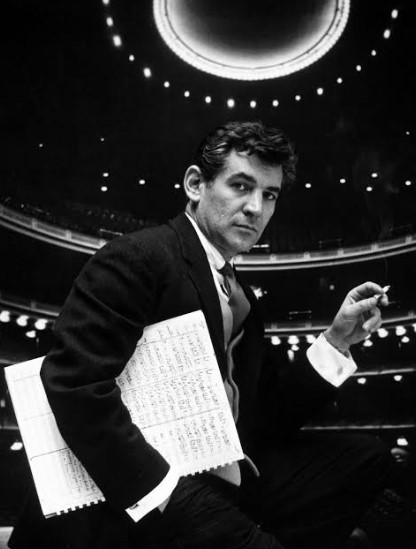
Did you see the film Maestro when it was first released in 2023?
I recently saw it again at a local film club. By any standards, the film, about that consummate musician Leonard Bernstein (1918-1990), Lenny as he was affectionately known, is a very good piece of cinema, sensitively directed, beautifully filmed, historically accurate, and wonderfully acted. I welcomed being able to see it again on the (relatively) big screen.
The challenge of any biopic is the question of what to focus on, even more complicated when dealing with one of the last century’s most towering musical figures. In Maestro, writers Josh Singer and Bradley Cooper, the latter being the film’s director and lead actor, home in on Bernstein’s marriage to the actress Felicia Montealegre, his extra-marital sexual relationships with men, and his devotion, despite his dalliances, to his wife and children.
The film assumes some prior knowledge of Bernstein, namely that he was a leading composer, world-class conductor, became immensely wealthy, and these are taken as givens by way of background to his marriage. Thus, the film is essentially a love story, rather than one about a musical genius.
This particular love story is as complex as they get. Even before their marriage, Felicia was aware of Bernstein’s affairs with men, and as no reference is made of his relationships with other women, the assumption is that, though he is clearly in love with her, he’s essentially gay, rather than bisexual.
Before her cancer diagnosis, Bernstein left Felicia and moved in with the young musicologist and composer Tom Cothran, though this isn’t covered in the film. After a few months, Bernstein moved back home to care for his wife following her terminal diagnosis, and after her death his grief was deep and genuine.
The film underlines the complexity of human sexuality, that though most people are totally heterosexual, and many are completely gay, some inhabit a more tangled realm. Though not portrayed in the film, Bernstein’s sexuality did not always sit easily with him, especially because he felt compelled to seek other men whilst married, and he sought therapy at a time when homosexuality was considered to be a mental illness.
Maestro does not make clear that for Bernstein, the conditions surrounding his marriage were compounded by his strong desire to have children, and the film more or less ignores the background of the period when homosexuality was illegal or, at best, was only partly decriminalised. Back then, the idea of cohabiting same-sex couples was viewed as being odd at best, and a perversion at worst; until fairly recently, if gay men and women wanted kids, traditional marriage offered the only opportunity.
The film makes evident that Bernstein’s extra-marital affairs are part of his life-credo of doing everything to excess, whether it was sex, performing music, composing, smoking, partying and, as he admitted himself, his sheer, overwhelming love of humanity. The superlative re-enactment of the legendary performance of Mahler’s Second Symphony in Ely Cathedral clearly demonstrates how Bernstein became the music.
Another scene shows him at a masterclass with young conductors, persuasively coaching one student through an awkward passage in Beethoven’s Eighth Symphony, and later seen making out and getting high with the same young man at a sweaty disco.
Bernstein approached other areas in his life without any half measures, but they are ignored in the film. These could have included the political and social activism of him and his wife, his charitable work, his revelatory pedagogy and his deep connection to his Jewish identity (though in one scene, he is wearing a t-shirt with Harvard written on it in Hebrew).
Maestro is essentially in two parts. The first, shorter, part is shot in black and white in an art-house-type style, with the narrative often conveyed with choreography in dream-like sequences, and perhaps confusing to some viewers. It did not entirely convince me, and I found it unnecessarily ‘arty’. The film then opens out – the screen is enlarged – and in colour, where the storyline takes a more traditional approach.
Hugely significant well-known colleagues and friends, such as the conductor Serge Koussevitzky, composer Aaron Copland, choreographer Jerome Robbins, lyricists Betty Comden and Adolph Green, are all there, underlining the fact that so many of the characters in the film, and in Bernstein’s life, were Jewish or gay, often both. In the film, they’re easy to miss, and their importance might have been made clearer.
The scenes of Bernstein conducting, few and brief though they are, are convincing. Cooper must have absorbed the numerous films of Bernstein conducting frame by frame, gesture by gesture, though he had a wonderful conducting coach in Yannick Nézet-Séguin, who is the actual off-scene, and soundtrack, conductor with the London Symphony Orchestra and Chorus.
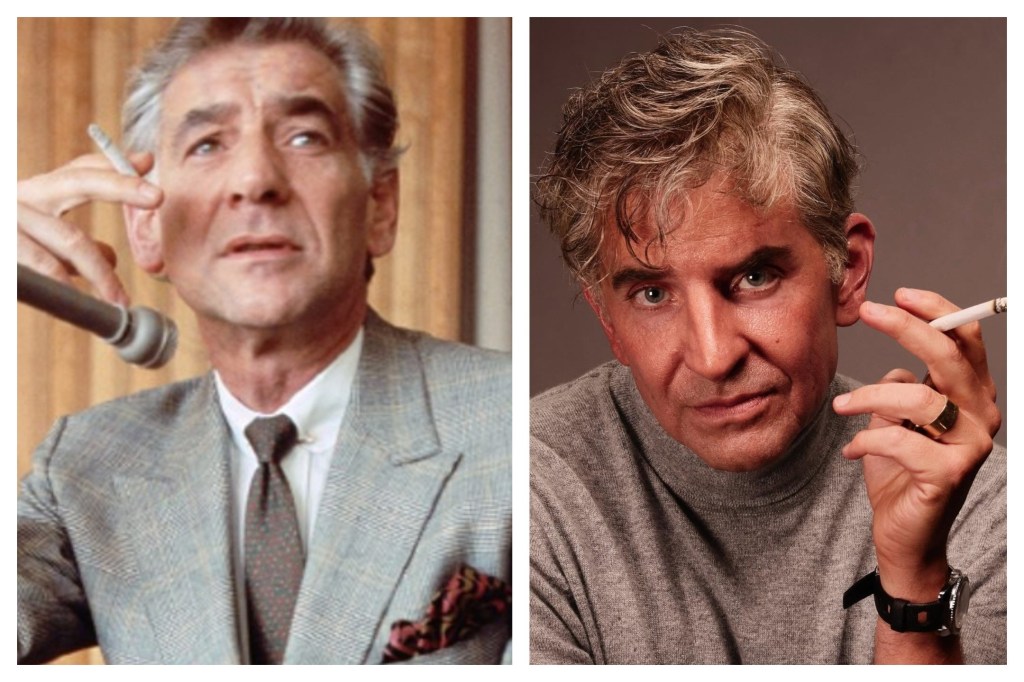
Cooper’s portrayal of Bernstein is astonishingly realistic, from his clear, tenor-registered speaking voice of the 1940s and ‘50s, to the gravelly, adenoidal, nicotine-soaked voice of later years. The fidgety hand gestures and his tactility are all there. So is the physiognomy, though Bernstein, at five-foot seven inches, was hardly a giant, whereas Cooper comes in at an obvious six-plus foot. Carey Mulligan’s sensitive and, at the end, heartbreaking, portrayal as Felicia is a triumph.
Despite its focus on Bernstein’s marriage, arguably at the expense of other things, not least the music, Maestro is a totally absorbing film, and one which has the endorsement of Bernstein’s three children. For a deeper understanding of the musician, his film and audio legacy remain central to the 20th century musical documentary canon. His filmed lectures, including the iconic Harvard Lectures, are pinnacles of music education, and his interviews are hugely revealing. Dip into these first before enjoying Maestro.


What do you think? Comment and/or leave a reply.