Three 20th-century violin concertos, once rarely heard in the UK, reveal how artistic outsiders defied modernist dogma to forge an unbroken lineage of unapologetic lyricism.
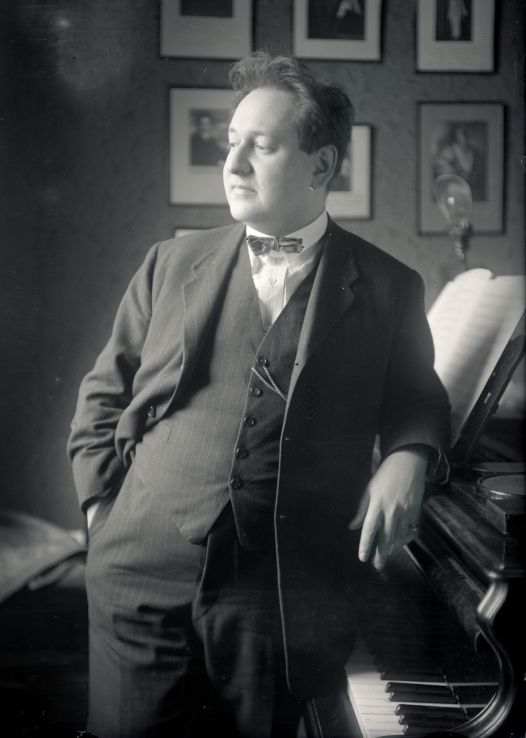
To be an artistic outsider in the early-to-mid 20th century was often to find oneself at odds with prevailing musical fashion, and with society’s norms. Yet in the cases of Karol Szymanowski, Erich Wolfgang Korngold, and Samuel Barber, that very sense of isolation yielded three of the most alluring violin concertos in the modern canon.
Szymanowski, a magnetic, aristocratic, and closeted gay composer writing amidst the collapse of old Europe, channelled his complex identity into a single-movement, rapturous work. Korngold, the Jewish émigré uprooted from Vienna to Los Angeles, fused European Romanticism with the gloss of the Hollywood soundstage. And Barber, navigating his own path as a gay man in mid-century America, stubbornly rejected the era’s demand for virtuosic showmanship in favour of deep poeticism.
This shared outsider perspective forged a remarkable lineage of 20th-century violin lyricism. Long before Hollywood’s composers, like Korngold, brought late-Romantic opulence to the silver screen, Szymanowski’s First Concerto of 1916, with its shimmering impressionism, rapturous climaxes, and sensual atmosphere, contains something of an unintentional blueprint for the later screen writing. Where Szymanowski conjured an intoxicating, private ecstasy, Korngold translated a mid-European opulence into magnificent Hollywood spectacle. He dazzled with unashamed virtuosity, yet Barber turned the American vernacular inward, creating an intimate, long-breathed expressiveness. These three concertos form an unbroken line of artistic freedom.
The Violin Concerto No. 1 by Karol Szymanowski (1882–1937) is perhaps the best-known work by this Polish-born composer, even though it’s performed less in the UK than the concertos of Korngold and Barber. In his own lifetime, however, he was recognised as a major composer, especially, though not exclusively, in Poland.
Photos of him suggest that he was, in many ways, quite ordinary-looking. Yet those who knew him testify that he had a magnetism which people found irresistible, an attractiveness that went beyond mere looks. Szymanowski’s sexuality placed him as an outsider within his period. He was also a dandy and something of a chronic hypochondriac, all of which added to his sense of aura. What we might describe as his outré personality is reflected in his musical language and its gestures.
The Concerto had a noble pedigree early on: in 1923, Nathan Milstein and Vladimir Horowitz played it as a violin and piano arrangement in Moscow, and Bronisław Huberman performed it in Vienna and Berlin in 1926. Such a performance ancestry testifies to how taken these illustrious musicians were with the piece. Though lasting no more than 25 minutes, it comes across as an epic statement. Szymanowski’s style is highly individualistic, employing infusions of impressionism, late Romanticism, exoticism, virtuosic violin writing, and sumptuous orchestration, with nods to Debussy, Stravinsky, and Scriabin. Planned with exquisite attention to thematic cohesion across its single-movement span, there’s something wonderfully exhausting about listening to this splendid score, and from all accounts, I suspect that’s how one felt after spending time in the company of Szymanowski himself.
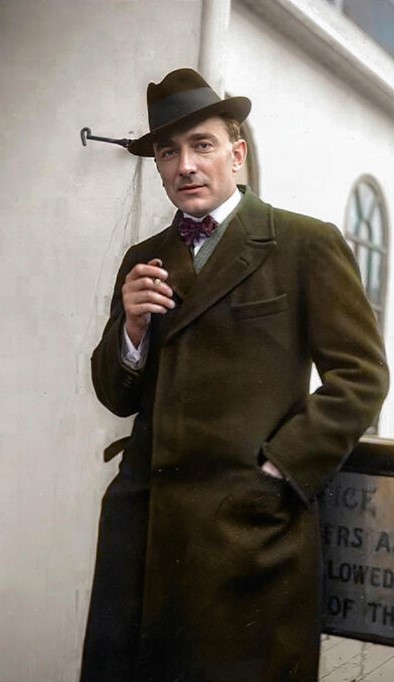
Szymanowski’s lyricism had a certain restraint to it, whereas Erich Wolfgang Korngold’s (1897–1957) was somewhat more heart-on-sleeve. A one-time professor of music in Vienna and an established composer, Korngold settled in the USA in 1934 to compose film scores. By 1938, he was part of that large group of mainly Jewish refugees who had the contacts and cash to escape Nazi Germany and Austria. Though he became one of the most successful Hollywood composers of all time, he always harboured notions of returning to Vienna. Well aware of Austrian antisemitism before and after World War Two, Korngold nonetheless considered himself an exile in his adopted land.
His sumptuous Violin Concerto (1945), with its luxurious scoring, virtuosic violin writing, and fabulous tunes, seems to have strayed directly from a film set. It belongs to a similar sound-world as Richard Addinsell’s contemporaneous Warsaw Concerto, composed for the British film Dangerous Moonlight. Relying heavily on themes from Korngold’s own film scores, as soon as it begins, one can imagine Bette Davis or Olivia de Havilland making appearances alongside Errol Flynn and Paul Muni.
His Americanism comes from the Hollywood environment, but his syntax remains firmly rooted in central European Romanticism. It places few demands on the listener, but is great if one wants the musical equivalent of eating artisan chocolates whilst having an indulgent bubble bath. Nothing up with that in my books.
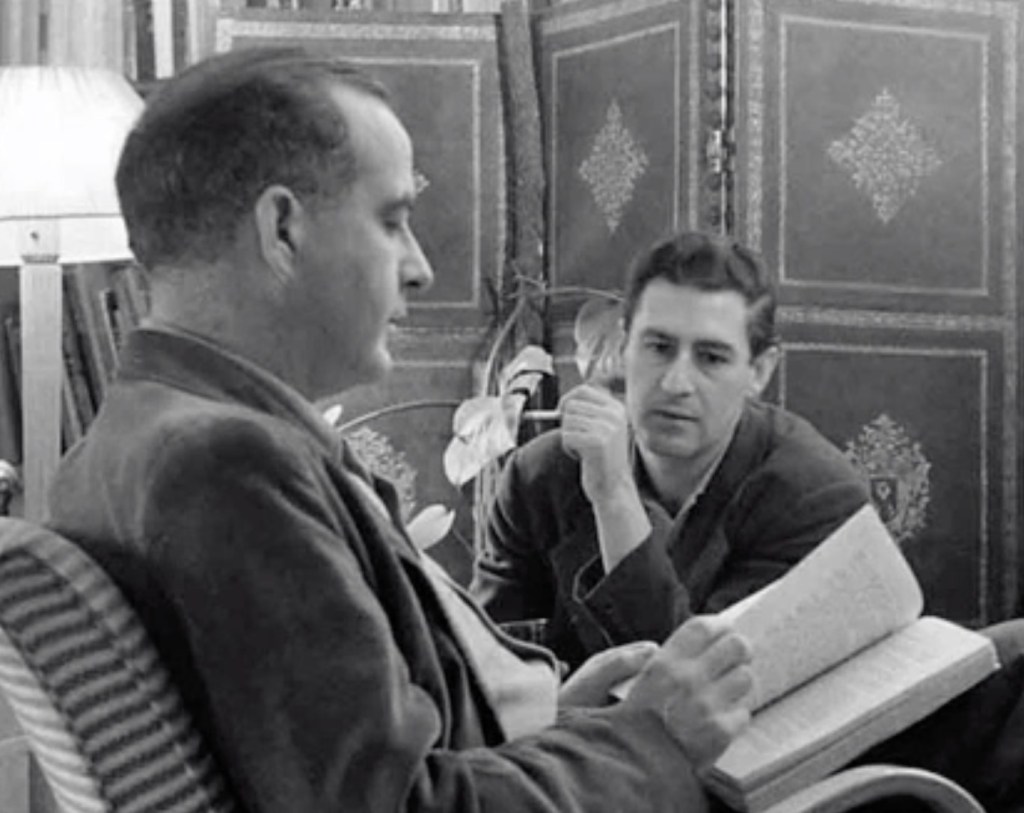
Samuel Barber (1910–1981) offers a completely different, inward-looking realisation of 20th-century romanticism. His own connection to being an outsider was the challenge of navigating his identity as a gay man, entering into an unconcealed romantic relationship with the composer and librettist Gian Carlo Menotti in the late 1920s, a union that was risky for its time. They remained together for more than 40 years, though Barber’s alcoholism, depression, and need to self-isolate eventually led to an amicable separation in 1970.
His Violin Concerto (1939) might, initially, sound just as accessible and pleasant as Korngold’s. But it hides a deeper, different craft. Drawing on a neo-Romantic American vernacular spearheaded by himself and Aaron Copland, and later taken up by Roy Harris, William Schuman, and Howard Hanson, Barber uses wide-spaced harmonies, nods to jazz, hints of modernism, and dashes of modality to create a true jewel.
Apart from the short finale, the Concerto is decidedly un-virtuosic, favouring long-breathed melodic lyricism instead. This deliberate lack of showmanship failed to impress philanthropist Samuel Fels (the work’s commissioner), Iso Briselli (the violinist chosen for the premiere), or Briselli’s meddling tutor, Albert Meiff. The consensus in this convoluted story was that the brief, four-minute perpetuum mobile finale did not compensate for the lack of pyrotechnics elsewhere, and sat incongruously with the first two movements. They might have added that the orchestration, scaled back, with no heavy brass and gorgeous flecks of piano, hardly shouts ‘big music’.
Briselli never did perform the concerto, missing a trick as the work was swiftly taken up by Isaac Stern, Jascha Heifetz, and Itzhak Perlman. Yet the work’s lack of showy virtuosity is neither here nor there; Beethoven’s Violin Concerto, after all, is the least technically demanding of all the warhorse concertos, yet it’s certainly the most frequently performed. Barber deliberately chose an intimate canvas, and his solution of a rapid, racing finale following two expansive lyrical movements stands as something of a masterstroke.
Szymanowski, Korngold, and Barber preserved the singing voice of the violin in the twentieth century, and these three concertos are testament to the enduring power of unapologetic lyricism.


What do you think? Comment and/or leave a reply.