When Benjamin Britten composed his Sinfonia da Requiem in 1940, it started him on an unexpected journey on his road to pacifism. Received opinion suggests that it culminated in his War Requiem, but it turned out to be more complex, personal, and shattering than that.
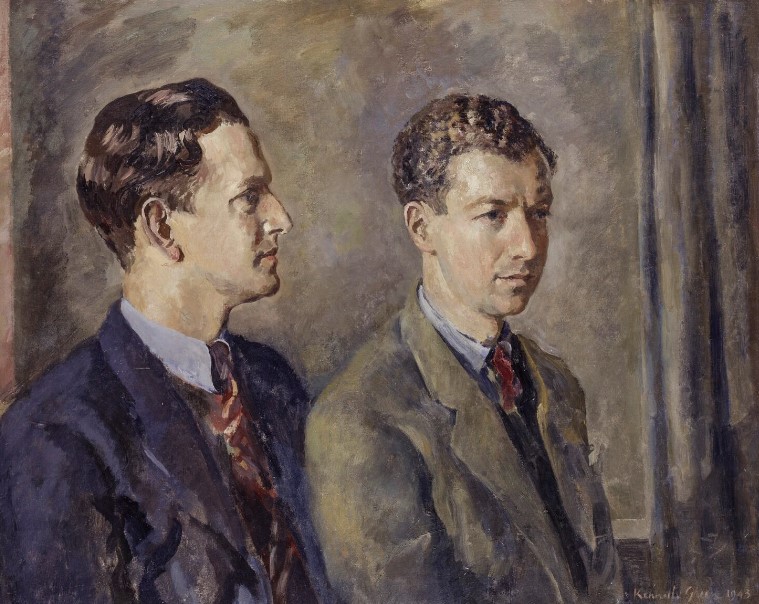
Since its premiere in the newly built Coventry Cathedral in 1962, the War Requiem has become central repertoire in British twentieth-century choral music. It is also seen, rather like the cathedral itself, as a symbol of post-war reconciliation between Britain and its one-time enemy, Germany.
The lesser-known, purely instrumental Sinfonia da Requiem, however, was actually composed during World War II itself, and though the composer was just 26 years old in 1940, it is a remarkably mature work. At that time, Britten and his partner, the tenor Peter Pears, had been living in the USA since April 1939, before the outbreak of war, as they became increasingly alarmed, as pacifists, by the volatile political situation in Europe.
Later that year, Britten received a commission from the Japanese government to write a piece to commemorate the 2,600th anniversary of the establishment of the Japanese Empire. Other composers, including Richard Strauss, were also invited to compose new works, and although Japan was not yet part of a formal alliance with Germany, things were decidedly politically messy by that stage.
Though Japan and Nazi Germany began cosying up to one another as early as 1935, the alliance wasn’t formalised until the Tripartite Pact (Germany, Japan, and Italy) in September 1940. For Strauss, the commission was an easy win, and his Japanische Festmusik was premiered in Tokyo in December 1940. Not surprisingly, this now-obscure work has more or less conveniently fallen off the edge of Strauss’s CV!
At the time of the commission, Britten wasn’t to know that Japan would become part of the Axis powers. He completed the work, and in the autumn of 1940, the Sinfonia da Requiem landed on some flunky’s desk in Tokyo and was immediately rejected. The Japanese were expecting a celebratory work. Instead, they received a requiem without words, and declared it an insult to the Emperor and the official State Shinto faith because of its overt Christian theme.
This rejection played in Britten’s favour, because unlike Strauss’s offering, the Sinfonia da Requiem is without taint. By the time of the premiere in New York in March 1941, conducted by John Barbirolli, Britain and Japan were in a state of diplomatic hostility, and nine months later, following Pearl Harbour, they were at war.
Of the Sinfonia da Requiem, Britten wrote in 1940: “I’m making it just as anti-war as possible … I don’t believe you can express social or political or economic theories in music, but by coupling new music with well-known musical phrases, I think it’s possible to get over certain ideas … all I’m sure of is my own anti-war conviction as I write it.” That said, more personally, the work carries a dedication in memory of his parents. With the three movements titled Lacrymosa, Dies irae, and Requiem aeternam, the 20-minute work is, essentially, a requiem without words.
I first heard the work when I was a student, and found it to be a gloomy and ponderous experience. What I didn’t appreciate then, in my youth and musical naivete, is the sheer sense of craftsmanship that the Sinfonia da Requiem exhibits. The material is consistently strong, motivic and organic development tightly handled, the orchestration so individualistic and striking, the pacing and unfolding of the musical drama totally convincing. And far from being gloomy, the Dies irae is a rapid, quicksilver orchestral showcase, bathed in half-light and sprites, unlike the terrifying corresponding movement in the War Requiem.
Britten’s influences aren’t hidden, but are expertly integrated so that the overall result is a sound-world which the composer, even by 1940, had made his own. Yes, Stravinsky (Symphony of Psalms, The Song of the Nightingale), Berg (Violin Concerto), dashes of Prokofiev, Shostakovich, and Copland are all there, purely as technical means to ends; no hint of pastiche. And, actually, with the exception of Stravinsky—who stands alone as that wondrous pinnacle of 20th-century music—the Sinfonia da Requiem gives these other composers a run for their money.
Having successfully registered as conscientious objectors, Britten and Pears decided to return to Britain in 1942. Whilst the rest of the country took up the fight against Hitler, either as conscripts or non-combatants, Britten knuckled down and started work on his opera Peter Grimes. In a sense, this is indicative of his personality: a single-mindedness to compose.
Back home, they realised that, despite their status as conscientious objectors, there was a moral imperative to take an active part in the war effort. They gave dozens of recitals in bombed-out towns and cities, in partly destroyed buildings, during blackouts and air raids. Believing that music was essential for solace and healing, they performed for servicemen and women, evacuees, and the injured.
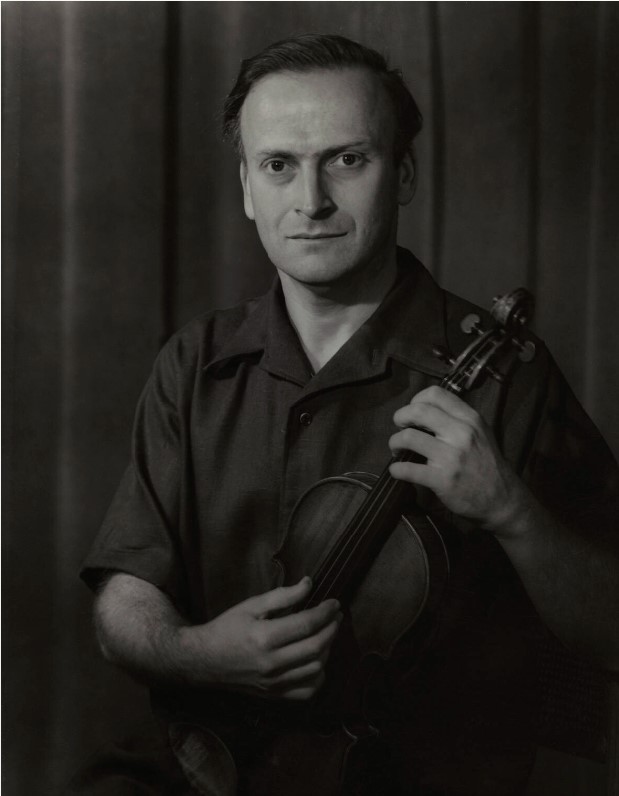
Most significantly, in July 1945, Britten, without Pears, went with the violinist Yehudi Menuhin to perform for Holocaust survivors in the recently liberated Bergen-Belsen concentration camp. They gave numerous short recitals within a week, performing music which included Bach, Mozart, Beethoven, and Mendelssohn. This had a profound and lasting impact on the composer. He never publicly talked about the experience, but it informed, and in many ways cast a long shadow on, his compositions from then on.
The cellist Anita Lasker-Wallfisch, who celebrated her 101st birthday earlier this year (2026), was one of the survivors who witnessed the Britten–Menuhin recitals in Belsen, and she eventually became a founder-member of the English Chamber Orchestra (ECO). In July 1945, days after one of the Belsen performances, she wrote to her friend Helli Schrier commenting that the violinist and his unnamed accompanist were “dressed in simple attire bordering on the slovenly, which matched the surroundings perfectly.”
Years later, while she was playing in the ECO under Britten at Aldeburgh, conversation turned to his recitals at Belsen, and Lasker-Wallfisch and Britten realised, for the first time, that they had both been there. So she showed him the original 1945 letter just before the opening of the 1969 festival; Schrier had given the letter back to Lasker-Wallfisch when the latter was piecing together her memories. Deeply moved, Britten asked to borrow it. When Snape Maltings Concert Hall was gutted by fire the very next night, Lasker-Wallfisch assumed her letter had burned with it, until Britten walked into the temporary rehearsal venue at nearby Thorpeness the following morning and greeted her with the words, “Anita, I’ve got your letter.”
Britten never envisaged that his Sinfonia da Requiem would, in a roundabout way, take him on a journey where, even as a pacifist, he would never be able to shake off the nightmare of war.
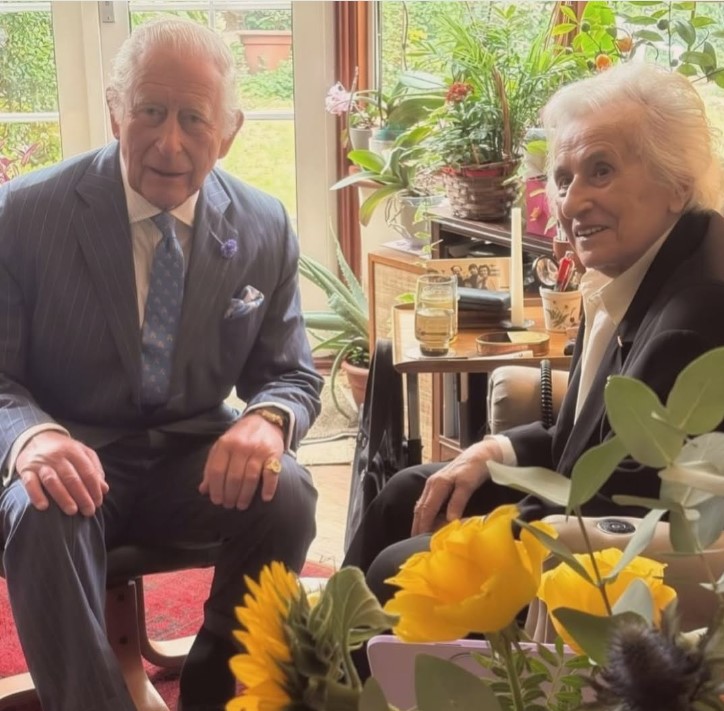
‘Inherit the Truth: The Cellist of Auschwitz’ by Anita Lasker-Wallfisch is published by Faber.


What do you think? Comment and/or leave a reply.