(The Court, The Pantomime & The Premiere)
Welcome back to part two of our Haydnesque miniseries. Last week, we dismantled the Victorian myth of “Papa Haydn” and explored the sacred symbolism hidden within Symphony No. 45. Now, let’s turn to the performance itself, and what was really at stake in the Esterházy court.
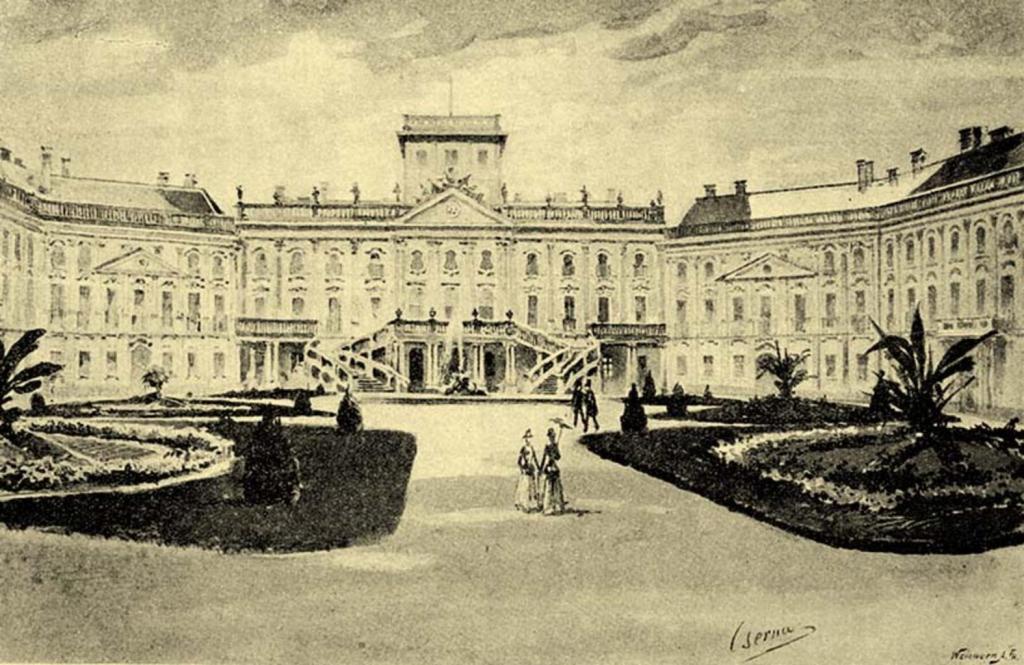
The famous story of the Farewell Symphony’s origin is most prominently reported by Haydn’s first biographer, Georg August Griesinger, in 1810, although it was certainly doing the rounds by the 1780s. As Haydn related the story first-hand to Griesinger, and as all accounts more or less tally, it must be taken at face value. Griesinger writes:
“In Prince Esterházy’s orchestra were several vigorous young married men who in summer, when the Prince stayed at Esterháza castle, had to leave their wives behind in Eisenstadt. Contrary to his custom, the Prince once wished to extend his stay at Esterháza by several weeks. The fond husbands, especially dismayed at this news, turned to Haydn and pleaded with him to do something.”
The rest, as they say, is history, and Griesinger concludes the tale by saying: “The Prince and the audience understood the meaning of this pantomime at once, and the next day came the order to depart from Esterháza.”
So let’s untangle this. The married men in the orchestra (for, as I previously said, they were all men), most of them young, are described as “vigorous”, and “fond” or “ardent”, depending on the translation. Prince Nicholas, as well as being artistically savvy and a musician himself, was a good employer. He made sure that his staff were comfortably housed and well fed, and he ensured that, by 18th-century standards, they had excellent healthcare.
But he was a disciplinarian, and staff worked for him under a very strict code of conduct, which included the highest standards of moral correctness. If he so much as suspected that young, “vigorous”, “fond”, married staff, away from their spouses, engaged in anything extra-marital, they would have been dismissed without question.
Haydn was well aware that his players had been abstinent for some time, and we now know that the Farewell Symphony makes reference to the Easter Tenebrae service, Easter being preceded by Lent, whose byword is abstinence. Another early biographer, Albert Christoph Dies, relating the same story in 1808, describes the young married musicians as being “lovelorn”, and he quotes Haydn, who told him: “I was also young and consequently no better than the musicians.” That said, he was allowed to bring his wife with him to Eszterháza, though as the marriage was an unhappy one (by his own admission, Mrs. Haydn was a nightmare on toast), it was a privilege both could have done without.
What else do we know? The musicians snuff out their candles, and Griesinger, I remind you, tells us that “the Prince understood the meaning of this pantomime.” Haydn and his musicians were always expected to be at the ready to perform. You’ll read that Papa Haydn always dressed properly when he composed, but in reality, he and the musicians didn’t have much option: they always had to be dressed in formal attire and freshly shaved each day.
Compare that to the resident troupe of actors in the household. They were permitted to slob around the place, could go unshaven, even get drunk, and they could bring their wives to Eszterháza. They inhabited a far freer world than any of the other servants. And what sort of theatre did the prince enjoy most? Well, farce and pantomime, the very word that Griesinger uses (see also Korsyn, 2009).
So let’s get into our musical time machine and go back to the premiere in 1772. The Symphony’s finale begins, and then all of a sudden stops. “Hang on a minute,” says the Prince. “What’s the crack?” A stately minuet then begins, music intrinsically associated with aristocracy, hierarchy, and the court. But then, the musicians start to leave, poking fun, surely, at this most noble dance.
The music becomes theatre; it becomes pantomime where you can do the absurd and get away with it. And they do get away with it, because the musicians briefly become like the Prince’s actors. It was deeply subversive, because normally the musicians could only leave their places once the Prince had left the room. But this time round, the Prince was the last man standing, Billy No-Mates. Everyone else had left.
Haydn wasn’t the Prince’s pal. Sure, they performed duets together, but within a strict code of etiquette between them, for Haydn always was a servant, first and foremost, in the Prince’s eyes. As the musicians leave individually to the strains of an aristocratic dance, yet walking, not dancing, the Prince, for the first time, sees them as individuals.
But Haydn saves the best bit until the very end. The last two violinists—one of them was Haydn himself at this audacious premiere—parodying the duets that Haydn himself played with the Prince, leave the stage, walking off into silence.
Yet the final chord of the piece is incomplete: Haydn’s way of telling the Prince that the symphony will have only truly finished once he gives permission for the musicians to return to their wives. And when the symphony ends in that obscure key of F-sharp major, it’s traditionally been considered the most remote of all the keys, reflecting the geographical remoteness of Eszterháza itself.
This pantomime of a symphony, replete with religious symbolism, was exactly the type of innovation that cuts across Haydn’s career. There’s nothing new under the sun, and though we think Beethoven is being experimental by including voices in a symphony, here’s Haydn, more than 50 years earlier, embedding acting in a symphony, where the musicians walk out before the audience (i.e., the Prince) allows them.
The Farewell Symphony was never repeated at the Esterházy court. How could it have been? It was a one-off, specific event. Nowadays, an audience will giggle as the musicians depart, giggles of embarrassment, perhaps, because we don’t really know how to react to Haydn’s pantomime.
Prince Nicholas’s successor, Anton, downsized the court. The world, post-French Revolution, was changing, and Haydn’s time at the Esterházy court came to an end. He received a handsome pension and an emeritus lifetime position from Prince Anton, and he relished his retirement, enjoying extended stays in London and taking the capital by storm as a successful freelance composer, managed by his far-sighted agent Johann Peter Salomon, and making a mint.
He eventually settled in Vienna for his final years, shed no tears when his wife died in 1800, and Prince Anton’s son, Nicholas, ensured that Haydn lived out his life in comfort, as something of a celebrity.
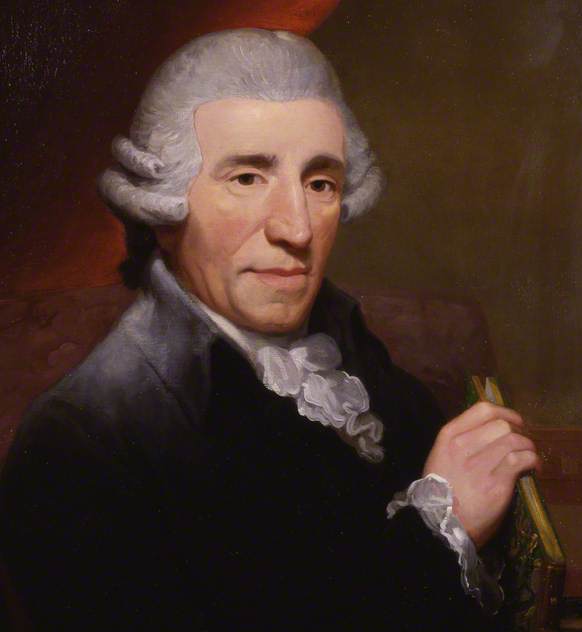
(c) Royal College of Music; Supplied by The Public Catalogue Foundation


What do you think? Comment and/or leave a reply.