The story of two well-acquainted composers cold-shouldered by fashion, casualties of a modernist revolution, and the subtle threads that bound them.
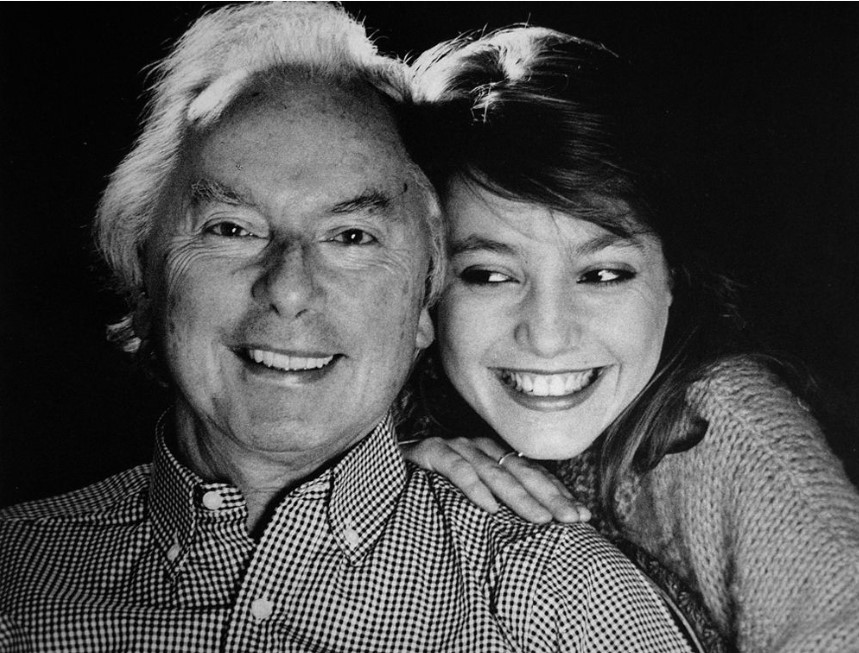
(Photo © Camilla Jessel Panufnik)
In 1959, William Glock became the BBC’s Controller of Music. Some might describe Glock’s tenure as an aesthetic dictatorship, for he essentially initiated an unofficial blacklist of composers that included Andrzej Panufnik and Lennox Berkeley.
Glock, himself a professional pianist of some note, championed the avant-garde and modernism at the expense of contemporary composers he deemed too conservative. This policy resulted in a plethora of important BBC commissions from leading figures of the day, notably British modernists including Peter Maxwell Davies, Harrison Birtwistle, and Elisabeth Lutyens. Undoubtedly, Glock enabled London to become one of the world’s main centres for contemporary classical music.
For Glock, figures such as Pierre Boulez and Karlheinz Stockhausen were to be championed, while others, including Panufnik and Berkeley, were sidelined. These two men were well-acquainted, mutually respectful colleagues who fell foul of BBC gatekeeping despite, curiously enough, a long-standing personal friendship between Berkeley and Glock.
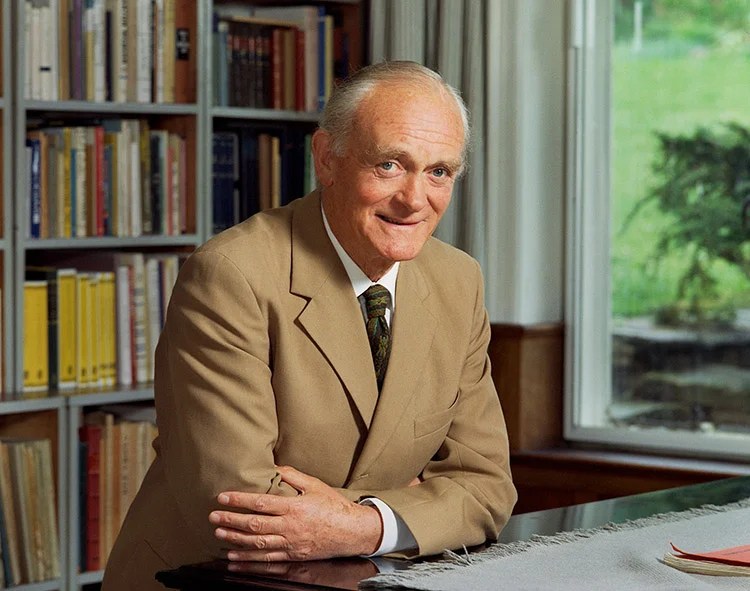
(© National Portrait Gallery)
Polish-born Andrzej Panufnik (1914–1991) became a naturalized British citizen after leaving his native land. His earlier life was bound up with Poland’s struggles against Nazism and, later, communism. He abhorred both ideologies, so making a life in the UK following his 1954 defection offered him long-sought stability in his dual career as conductor and composer. He was knighted in 1991. Alongside Karol Szymanowski (who I have written about previously), Witold Lutosławski, and Krzysztof Penderecki, Panufnik remains one of the seminal figures of the 20th-century Polish School.
Lennox Berkeley (1903–1989) composed four symphonies between 1940 and 1978. He was an important figure to everyone who followed post-war British concert music, and I recall listening to the premiere of his fine Fourth Symphony in 1978, a real red-letter day in that year’s UK musical calendar. That same year, Maxwell Davies’s First Symphony received its premiere, while Michael Tippett’s Fourth had debuted the previous year. It was a heady period for the British symphony. Now, though Berkeley’s smaller-scale and vocal works make occasional appearances on concert programs, his symphonies are all but forgotten.
His Third Symphony was first performed at the Cheltenham Festival in 1969, then the premier launchpad for contemporary British symphonies by composers who, in Glock’s mind, were still foolish enough to flirt with tonality. Even so, a premiere at Cheltenham guaranteed a BBC broadcast, critiques in the quality broadsheets, and performances by top-tier orchestras. Berkeley’s Third was premiered by the BBC Northern Symphony Orchestra (now the BBC Philharmonic) conducted by Sir Adrian Boult—a high-profile line-up if ever there was one.
Despite its importance, the Cheltenham Festival, over 100 miles from central London, could become something of a creative bubble, and Berkeley’s new symphony had to wait four years for a London performance. In a notable twist of continuity, Berkeley’s son, Michael, later became the artistic director of the festival.
Panufnik’s Sinfonia Sacra (also his Third Symphony) received its UK premiere in Birmingham in 1965, with the composer conducting the City of Birmingham Symphony Orchestra, where he had served as music director. Its London premiere in 1968 did receive a BBC broadcast, but only because the Royal Festival Hall concert was part of the Bournemouth Symphony Orchestra’s London tour under Constantin Silvestri, not because Glock was well-disposed toward the work or its creator.
According to the official Panufnik site, Sinfonia Sacra is the most frequently performed of his ten symphonies. Even so, everything is relative: a “frequently performed” Panufnik symphony remains a rare phenomenon. Nonetheless, this compact work (c. 22 minutes) deserves wide recognition. It is powerful and compelling, taking as its starting point the earliest known hymn in the Polish language, the Bogurodzica.
The opening and closing fanfares may owe something to Janáček’s Sinfonietta, but the unfolding of the hymn tune and its final integration with those fanfares proves that complexity can often be superseded by the simplest yet most effective gestures. In the final section, “Hymn,” the subtle elongation of a phrase through the occasional insertion of a 5/4 bar within a 4/4 metric framework allows the music a longer intake of breath before continuing. Within these bars, cross-rhythms of slow triplets introduce momentary rhythmic discombobulations. It is all expertly controlled, the hallmark of a symphony with a big heart.
Berkeley’s Third Symphony is similarly concise, lasting around 15 minutes in a single continuous span. Unlike the Panufnik, one wouldn’t necessarily describe it as a work “with a big heart,” yet it leaves no doubt that Berkeley thought naturally in symphonic terms. This closely argued score is a model of thematic concentration. It might be tempting to label it a Sinfonietta to suggest something small-scale, but like Sibelius’s Seventh Symphony or Roy Harris’s Third, it is a deceptively weighty piece.
Berkeley’s style here is flexibly tonal. There is a nod to 12-tone technique, though clearly not enough to have assuaged Glock, set within a harmonic framework so that when the final chord arrives, it comes as no surprise that it is a clear D major, complete with an added sixth and major seventh. The orchestral textures are crystalline. A testament to Berkeley’s studies with Nadia Boulanger, everything possesses a Gallic clarity with not an extraneous note in the score; every instrument plays a defined role.
The Third Symphony makes no grand posturing, and the average subscription concertgoer might find it understated. But it contains immense symphonic craft in spades.
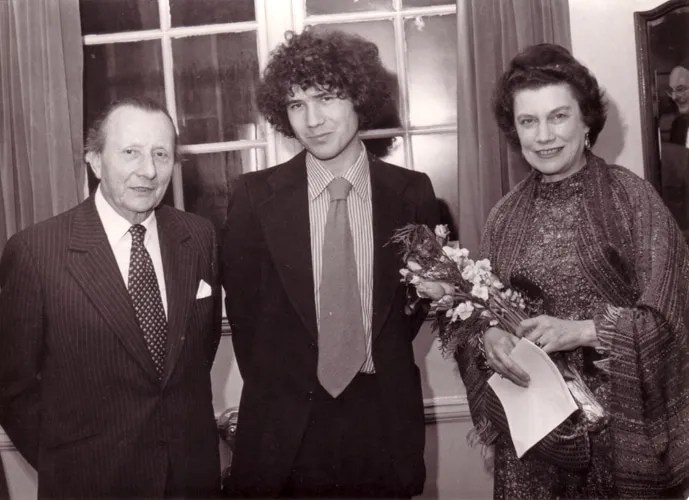
There is a lovely postscript to the relationship between Berkeley and Panufnik that goes well beyond Glock’s idiosyncratic aversion to their music. Both had children who became established, highly respected composers. Roxanna Panufnik is widely considered one of the most prominent contemporary British composers, while Michael Berkeley, alongside a distinguished broadcasting career primarily with BBC Radio 3, has built an impressive catalogue of works. Other personal threads link the fathers. Both explored the sacred: Berkeley through a deep commitment to Roman Catholicism, and Panufnik, though born Catholic, not through organised religion, but through a humanistic, meditative spirituality.
Both also married Jewish women, Berkeley marrying Freda Bernstein in 1946, and Panufnik marrying Camilla Jessel in 1963. Because of this maternal lineage, both Michael Berkeley and Roxanna Panufnik are, according to traditional Judaism, Jewish. While neither practices the religion, both proudly draw upon their Jewish heritage in various creative ways. Like their fathers, they enrich the great traditions of contemporary music in this country.


What do you think? Comment and/or leave a reply.